
Finding the best location tonight…
—
Chance now
—
Loading live forecast…
Tonight best score——
—/100
Aurora score ⓘ
—Loading live forecast…
 Kp index——
 Cloud cover——
 Best time—Local time
Accurate aurora forecasts, clear weather data and real-time alerts for your location.


Loading live forecast…
Kp index——Cloud cover——Best time—Local time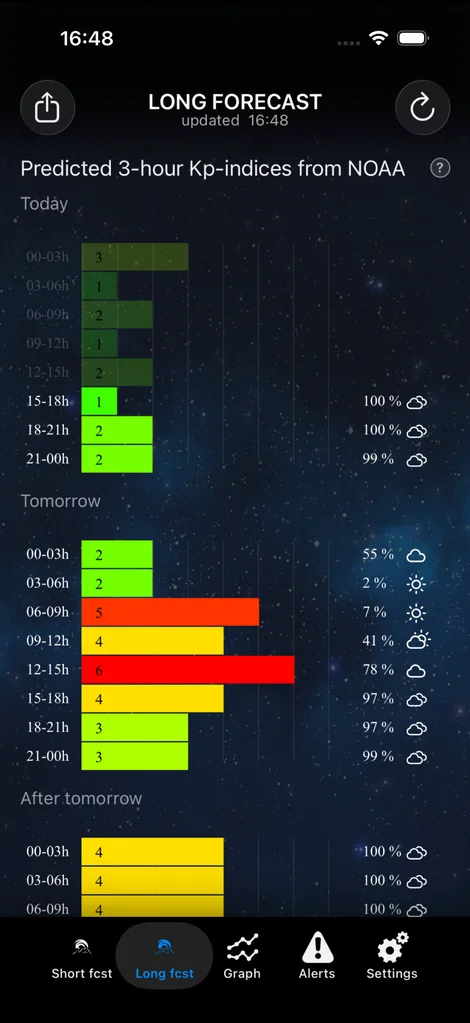
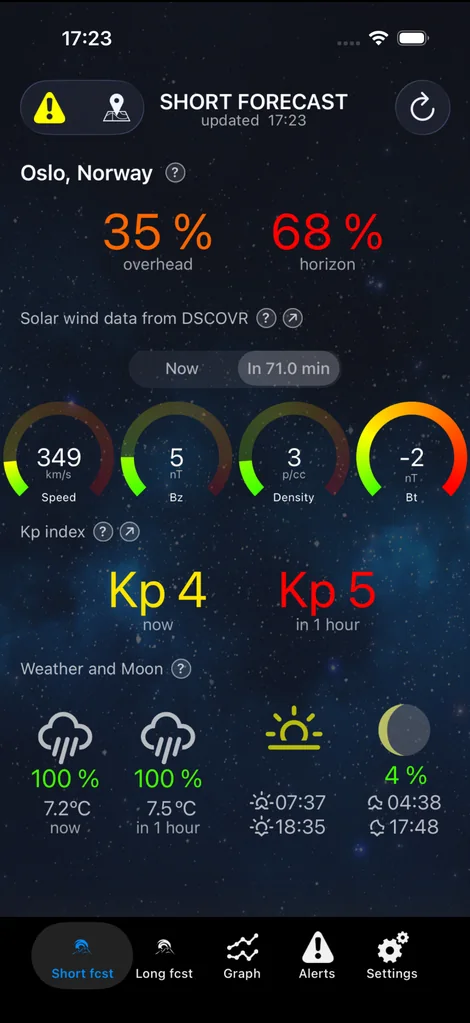
Real-time alerts, detailed forecasts and aurora maps anywhere in the world.
 Push notifications
 Aurora maps
 3-day forecast
 Favorite locations
 Detailed space weather data










Aurora Alerts is an app designed to monitor real-time auroral activity and push alert to let you know if there may be aurora borealis (northern lights) visible tonight. Whenever you are home or away, Aurora Alerts will notify you if the possibility of seeing the northern lights exists.
Viewing Score is a local 0–100 estimate, not an official NOAA probability. It starts with the aurora chance for the location; future hours adjust that activity using the predicted Kp.
The score is then reduced by daylight, cloud cover (when “Include clouds in score” is enabled), and bright Moon conditions when the Moon is above the horizon. Clear, dark conditions therefore preserve more of the aurora signal, while daylight or heavy clouds can reduce the score sharply.